
Three of my sons were murdered, but why did the police spy on us?
Subscribe for free for twice-weekly true crime articles or become a paid subscriber to get premium content – https://totalcrime.substack.com/
By Chris Summers 14 March 2026
In the early hours of New Year’s Day 1987 Trevor Monerville, a young black man, vanished after what is believed to be an altercation with officers from the notorious Stoke Newington police station in north east London.
Seven years later Trevor – whose personality had been completely altered by the incident – was murdered in London, a crime that remains unsolved to this day.
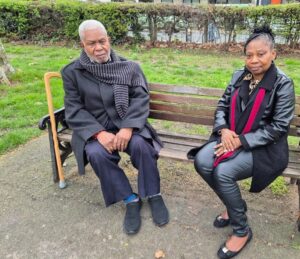
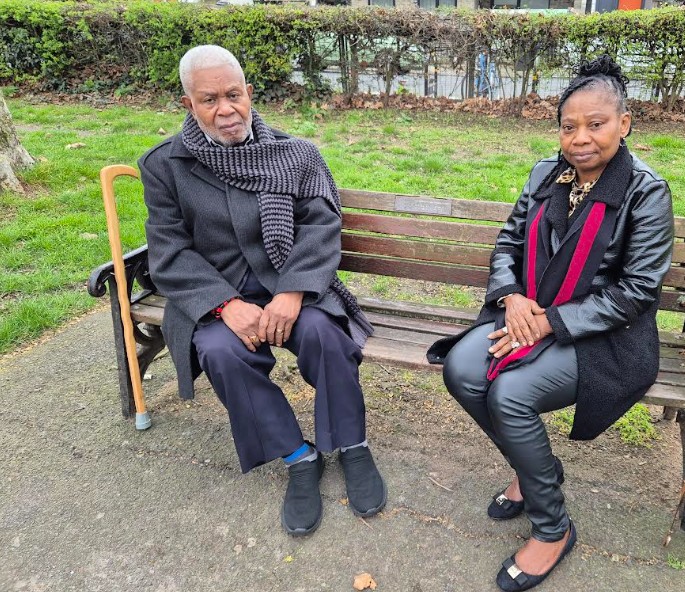
In today’s Substack I interview Trevor’s father, John Burke-Monerville (pictured with his wife Linda) – who has since suffered the pain of having two more sons, Joseph and David, murdered on the streets of London – who is still campaigning to find out the truth about Trevor and about the undercover police officers who spied on his family.
“Right now what I would like as a family, myself and my wife, is for them [the police] to tell us the truth,” John told me recently during a meeting at the offices of his solicitors, Birnberg Peirce.
“Tell us what truly happened with our children, because we have endured so much that we can take it,” he said.
In reference to Trevor, and the spying, Mr Burke-Monerville told me: “They refuse to tell the truth. They are a bunch of liars. They are very, very, very notorious.”
Mr Burke-Monerville, who was accompanied by his wife Linda and solicitor Paul Ham, said he had had numerous meetings with high-ranking officers in the Metropolitan Police and he added: “We are not stupid people and when we have meetings with them, they believe that they are fooling us…and they always seem to deflect away from their own actions and not address what really matters to us.”
When St Lucia-born Mr Burke-Monerville gave evidence in October 2024 he told the Undercover Policing Inquiry: “The discovery that I, my family and the campaign we set up for justice for my son were spied on by undercover police has had a significant traumatic impact on me.”
The inquiry was set up a decade ago by the then Home Secretary Theresa May after several newspapers revealed that during the 1960s, 70s, 80s, 90s and even into the 2000s undercover officers working for the Met’s Special Demonstration Squad (SDS) overstepped the mark while spying on a variety of protest groups, including the Trevor Monerville campaign.
SDS officers had slept with a number of women who had fallen in love with their fake activist personas, and even used the names of dead children to create bogus identities.
But what has shocked many people during the inquiry is the sheer number of campaigns which were targeted, most of which were completely harmless and peaceful organisations who simply wanted to get to the bottom of the truth about their loved ones.
The inquiry’s first report, covering the years 1968-1982 (Tranche One), was published in 2023.
Tranche Two (1983-1992) has concluded, and the third tranche (1993-2007) began hearing evidence last month, and can be viewed on a livestream on YouTube.
I will return later to my recent interview with John and Linda, but first let me clarify the sequence of events for you.
On 18 March 1994 Trevor, who was then 26, was stabbed to death in Trumans Road, Stoke Newington. His killer or killers have never been caught.

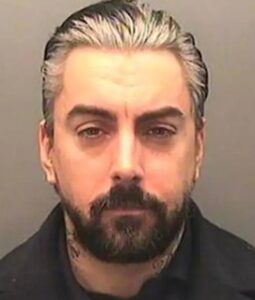
Then in February 2013 another son, 19-year-old Joseph Burke-Monerville, (pictured above), was shot by members of the Amhurst or A-Road Gang in Hackney on a ride-out looking for members of the rival Pembury Gang.
Joseph’s twin brother Jonathan (pictured below) and his older brother David were both wounded.
None of the brothers were gang members.
Linda said they were told by police Joseph, Jonathan and David were in the “wrong place at the wrong time”.

But she told me: “Where can you be safe in Britain? Where? Where is the right place to be?”
Scott Andrews, 27, Roshane Reid, 21, and Shahed Nowaz, 19, were charged with murder and two counts of attempted murder but the charges were dropped in May 2015, days before the trial was due to take place, over issues with how the key prosecution witness had been handled.
Then in June 2019 David Bello-Monerville, 38, was stabbed to death in Barnet. Three people were convicted of his murder and jailed for life in 2020.
Mr Burke-Monerville has nothing but praise for the Barnet police who investigated the murder of David (pictured below) and believes it is not a coincidence that it is the two murders of his sons which took place in the borough of Hackney which remain unsolved.

But let’s go back to the beginning of the story, and set the scene.
The 1970s and 1980s were tough decades to be young and black in London.
In a 1980 comedy sketch on Not The Nine O’Clock News, Savage, a racist police officer played by Griff Rhys Jones, is transferred to the SPG (Special Patrol Group) by Rowan Atkinson’s character.
But racism was no laughing matter.
High unemployment and racial harassment by the police had triggered the Brixton riots in 1981, which had triggered copycat disturbances in Liverpool’s Toxteth district, Handsworth in Birmingham, Chapeltown in Leeds and Manchester’s Moss Side.
The Scarman Report, which was published in November 1981, was criticised for downplaying accusations of police misconduct and denying the Met was institutionally racist.
In the mid- to late 1980s racist police officers were still far too common, and the SPG still had a notorious reputation for brutality and harassment of young black men.
Stoke Newington police station, in the London borough of Hackney, was seen as a stronghold of the worst elements in the Met.
In 1971 Aseta Simms died in suspicious circumstances at Stoke Newington police station.
In 1978 officers at Stoke Newington were accused of failing to help Michael Ferreira, who died after being stabbed during a fight with some white youths.
In 1983 Colin Roach died after being shot in the foyer of Stoke Newington, in mysterious circumstances.
And so we come to the early hours of New Year’s Day 1987 and Trevor was outside a popular nightclub in Stoke Newington with two of his aunts.
They decided to go in but he had had enough for the night and told them he would wait for them outside, Mr Burke-Monerville told me.
What happened next remains a mystery 39 years later.
At around 1.30 am Trevor vanished off the face of the Earth, and for the next three days his family could not find any trace of him.
“He had completely vanished and it was completely out of character,” John told me.
He went to Stoke Newington police station and asked them if Trevor had been arrested.
They denied it, even when he returned with a photograph of his son.
It was only on 4 January that Mr Burke-Monerville discovered that his son had been arrested and remanded in custody to Brixton prison.
He would later discover that Trevor had been found, unconscious, in the back of a car not far from the club, around 21 hours after he had last been seen publicly.
The car had a broken window and Mr Burke-Monerville believes the police intended to make it look as if Trevor had broken into the car and then collapsed, while drunk.
But the thing is that Trevor was not drunk. He had lost consciousness because he had been severely beaten.
It transpired that when he arrived at Brixton prison he was “in a comatose state” and when he was transferred to a hospital they somehow failed to notice that his skull had been fractured.
Trevor had in fact been attended to by three police surgeons five times and taken to Homerton Hospital twice during his detention.
According to the police, Trevor was only arrested at 10.40pm on 1 January after being found in the car.
His solicitor, Paul Ham, interjected: “Stoke Newington had a bad reputation and the family have over the years been concerned that something happened that led the police to deposit Trevor’s body, in his semi-conscious state, so he was off their hands.”
“If he were to be reported as missing, they could simply arrest him for breaking and entering into a car but he was unconscious in the car so it beggars belief that he was able to enter the car in that condition,” he added.
“It’s supposition of course but it is difficult to guess how else he went missing for so long and then reappeared only to be taken into custody,” he told me.
Mr Burke-Monerville told me: “The reason why we knew Trevor had been beaten up was that the custody record it says that he was restrained by six policemen to get his fingerprints.”
Mr Ham said: “Having read the custody records, it seems Trevor was in such a bad way that they had to forcibly carry him to the area where they do the fingerprints, not in the sense of restraining him.”
After being charged with breaking and entering into the car, Trevor was remanded to Highbury Magistrates Court but he was so badly injured that a justice of the peace had to come down and see him in the cells, and he was then remanded to Brixton prison.
At no point over those three days does he appear to have had any legal representation or even an awareness of where he was or what he was charged with, said Mr Ham.
Mr Burke-Monerville said he remembers going to see him in Brixton prison.
“All he kept saying to me was ‘Why, Dad, why?’, ‘Why did they arrest me,” he recalls.
He said he came home from the prison only to receive a phone call saying they needed his permission to carry out surgery on him.
A doctor informed Mr Burke-Monerville that Trevor’s brain injuries were as a result of a heavy blow to the head.
Trevor needed emergency surgery to remove a blood clot on the surface of his brain.
A report by Sam Galbraith, a neuro-surgeon who later became a Labour MP, said the intracranial clot was most likely caused by an assault and not a fall.
Within hours of the operation, the charges against Trevor were dropped but not before a campaign had already started.
One of the campaign’s posters has a photograph of a badly injured Trevor, lying in his hospital bed with an oxygen mask over his face and it asks: “Who Did This?”

The poster also posed a number of other questions, such as why had some of Trevor’s clothes been destroyed by the police.
The Trevor Monerville Campaign became big news fast, with sympathetic newspapers like The Guardian covering the story.
In the spring of 1987 there was even talk of Trevor’s aunt, Annette, being put up as an alternative left-wing candidate in Hackney North and Stoke Newington at that year’s general election.
In the end Diane Abbott – the Labour Party candidate – became Britain’s first black woman MP in May 1987.
The following month a Kurdish man, Tunay Hassan, died in custody at Dalton police station, also in Hackney. His family set up the Justice For Tunay Campaign, and soon they were working closely with the Trevor Monerville campaign.

In July 1988 an umbrella organisation, the Hackney Community Defence Association (HCDA), was set up to campaign on police brutality and perceived injustices.
But from then on John says his family was continually harassed by the police.
“One day there was a van parked across the road from my shop,” John told me, “and you could see the van rocking. And I went to knock on the door of the van and see who was in there. Some people came out and then they drove off.”
He is convinced they were plain-clothes police officers conducting some sort of surveillance on him and his shop.
Mr Ham said the police had always denied “infiltrating families” but they have subsequently admitted they “directly penetrated” the Trevor Monerville Campaign.
“They call it ‘collateral intrusion’,” he told me.
I asked John about something he said in one of his statements to the inquiry.
He said: “The undercover operation may have involved those in power other than the police.”
John said he believed MI5 might have been involved, and Mr Ham pointed out that several of the intelligence reports related to the monitoring of the Trevor Monerville Campaign mentioned being shared with Box 500, a colloquial term for MI5.
John told the Undercover Police Inquiry that in January 1989, his elderly parents, Edgar and Marie Burke, called the police to report a car accident.
“The police entered my parent’s home and arrested my 79-year-old father, they said for a driving offence,” said John, “They assaulted my 73-year-old mother who was trying to give my father his diabetes pills and a glass of water.”
“She was pulled to the ground and held down by three police officers. A police officer claimed that my mother attacked her,” he said.
Around this time John sent Trevor to St Lucia to escape the police harassment, but he had developed epilepsy since the January 1987 incident and needed to come back to London because of his fits.
John said his son had been a “healthy young man” before the January 1987 incident, and had never had epilepsy prior to the assault.
He told me his son’s personality had totally changed since the 1987 incident.
Whereas before he had been helping out in his father’s electrical repairs shop, now he was only able to sit at home, drinking Carlsberg Special Brew and smoking cigarettes.
He told me there were frequent drink-driving incidents.
“He used to get in trouble with the police for drinking and driving, and they themselves would stop him all the time, give him a drink and then arrest him for drink-driving,” John said.
In 1990 John’s wife Linda, who had been working in London as a teacher, was suddenly deported back to her native Nigeria.

The pair (pictured with a tree which was planted in Hackney Downs Park in 2014 to commemorate Joseph’s death) are convinced her deportation – which was later overturned after an intervention by Labour MP Brian Sedgemore, who died in 2015 – was part of the official harassment of the Monerville family.
Doctors at Maudsley Hospital had advised John that Trevor would regain his memory – and be able to remember what happened to him that night in January 1987 – but it had not returned by the time he was murdered on 18 March 1994.
He told the Undercover Policing Inquiry: “When Trevor was killed the campaign died with him. We lost all hope. I and the family still have questions to this day but it seemed we had exhausted all options by then and we were caught up in the grief of losing him.”
A police investigation was conducted into Trevor’s death, known as Operation Gamlingay but nobody was ever prosecuted for his murder.
Scandalously, the family was never notified when Trevor’s inquest was held on 13 March 1996.
But an SDS officer, HN15 (Mark Jenner) provided an intelligence report dated 13 February 1996 on the campaign’s second anniversary memorial, which was to be held just five days after the inquest.
John said, like most of the witnesses at the Undercover Policing Inquiry, he is “determined to find out the truth”.
He said their campaign to find out what happened to Trevor was not anything to do with left-wing politics and was certainly not of a level of subversion which would justify spying.
“It wasn’t about politics or socialism, it was about the truth,” he told me.
About Author