
Meet Natasa, the fearless journalist hoping to avoid becoming the Veronica Guerin of the Balkans
Subscribe for free for twice-weekly true crime articles or become a paid subscriber to get premium content – https://totalcrime.substack.com/
By Chris Summers 17 December 2025
Thirty years ago peace came to Bosnia-Herzegovina, after a civil war which claimed the lives of around 140,000 people in the former Yugoslavia.
But while the Balkans may not have tanks firing or guns blazing any more, it remains a dangerous place, especially if you are a crime reporter.
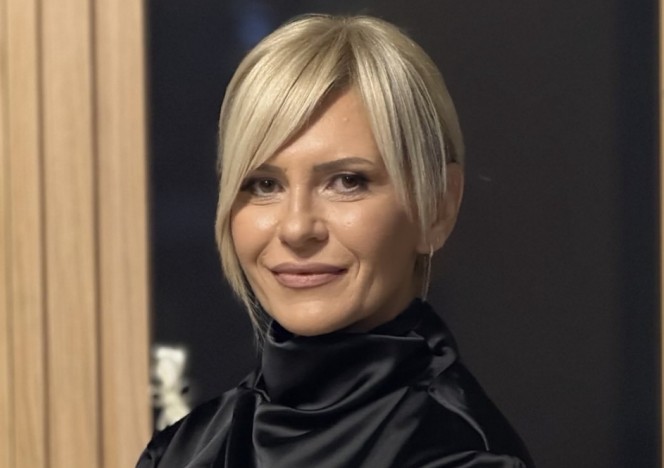
Let me introduce you to Natasa Miljanovic Zubac (pictured), a courageous journalist who spends her time trying to expose corruption and crime in Bosnia.
As an excuse for taking three days to reply to a message, that’s as good as it gets.
“Because of my work, my cars were set on fire and I suffered a series of criminal acts directed against me in the last three years,” she told me.
In 1996 journalist Veronica Guerin, who had exposed the secrets of many of Ireland’s biggest gangsters, was gunned down in her car on the outskirts of Dublin.
Natasa does not want to become another Veronica Guerin, but nor does she intend to give up.
On her X (formerly Twitter) profile, she carries the motto: “Tajna srece je sloboda, a tajna slobode je hrabrost” in Serbian,which translates as: ”The secret of happiness is freedom, and the secret of freedom is courage.”
But that courage has come at a price.
She has been receiving regular death threats since 2022 for her reporting of evidence which emerged when the encrypted phone network Sky ECC was cracked by French law enforcement in 2020 and exposed the following year.
I have written about Sky ECC several times on this Substack, most recently in May when I interviewed Justus Reisinger, a Dutch defence lawyer who represents dozens of clients accused of offences based on evidence from Sky ECC or EncroChat.
In August, the Balkan Investigative Reporting Network (BIRN) ran this story, saying Natasa had been detained by Bosnian police, accused of “disclosure of an official secret”.
After her family home in the southern town of Trebinje was raided, she was transferred to the capital, Sarajevo.
I was in Trebinje (pictured below) this summer myself – we took a day trip there during a family holiday in Montenegro.

If I had known about her at the time I would have looked her up and tried to meet her in person.
Trebinje is in Republika Srpska, the Bosnian Serb half of Bosnia-Herzegovina, which is a federal state.
The boundaries of the federal state were conjured up during long and complex negotiations in Dayton, Ohio, which led to an agreement which was finally signed in Paris on 14 December 1995 by the Bosniak (Bosnian Muslim) leader, Alija Izetbegovic and the leaders of Croatia, Franjo Tudjman, and Serbia’s President Slobodan Milosevic.
But, 30 years after the signing of the Dayton Peace Agreement, the tentacles of crime ignore borders in this part of the world.

The biggest organised crime groups (OCGs) in the former Yugoslavia are the Dino and Tito Cartel (based in Bosnia), the Škaljari gang and its arch-rival, the Kavač gang (both of which are based in Montenegro).
Then there is Nusret Seferovic (from Croatia) and the Krasniqi network (from Kosovo), who work closely together to supply false passports to OCGs in the Balkans.
Both were targeted for sanctions by the UK Foreign Office in October, as part of an effort to tackle people traffickers using the Balkan route.
British Prime Minister, Keir Starmer said: “There’s a criminal route through the Western Balkans bringing illegal migrants to the UK, and we’re determined to shut it down by working with European partners.”
People trafficking, and passport fraud, is just one of many criminal pies the Balkan gangs have got their fingers in.
“Crime has particularly developed since the war,” Natasa told me, “Criminals, certain police officers, judges, prosecutors and politicians are connected.”
She said: “After the war they were involved in smuggling cigarettes, and later drugs, as Sky-ECC demonstrates.”
Bosnia-Herzegovina is a transit country, she says, with most of the drugs being forwarded on to customers in western Europe.
“It is also a good country for money laundering,” Natasa told me.
She said the Dino and Tito Cartel (the origins of its name are obscure and heavily mythologised) was “very dominant” and had a big network of people who laundered money for it.
The cartel’s alleged leader, Edin Gačanin, was arrested in Dubai in November 2022 as part of Operation Desert Light (pictured below).

He is wanted for extradition to the Netherlands, where prosecutors accuse him of masterminding the smuggling of 2,500 kilograms of cocaine into Rotterdam and Hamburg.
Gačanin was allegedly one of the leaders of a so-called “super cartel” which also included the Mocro Maffia – led by Ridouan Taghi – from the Netherlands, the Kinahan OCG from Ireland and Italy’s Camorra, led by Raffaele Imperiale.
Natasa says there is certainly no appetite to prosecute him in Bosnia.
She works for the RTRS, the state broadcaster in Republika Srpska, a country where there are memorials (pictured below) to those Bosnian Serbs who died during the conflict in Bosnia-Herzegovina in the 1990s.

Natasa says her investigative journalism is not rewarded by her editors.
“My work system is such that I send everything I publish on my social networks to the police and prosecution institutions,” she told me, “I also inform the EU institutions in written form in order to protect myself.”
“After my car was set on fire I was on sick leave for 22 months,” she told me, “The local police in Trebinje assessed that my safety was at risk and this was communicated to me on the eve of the last parliamentary elections.”
“After returning from sick leave, I was employed in a technical assembly centre. I did not go out in public, even though I am a television journalist,” Natasa said.
“After my security situation worsened, when international organisations started worrying about my life and wanted to transferred me to Sarajevo, I asked the RTRS management to transfer me. They rejected me,” she said.
“In two months of work I pitched 26 stories (about Sky ECC encryption, connections of institutions, ministers and directors with crime). I never got any answer from my editors. SILENT,” she told me.
She was then signed off sick again earlier this year.
Then came the arrest, on 7 August, which followed her publishing information on social media about corruption and criminality among the police and judges in Bosnia-Herzegovina.
Natasa told me: “I was arrested illegally on August 7. They released me the next day because they couldn’t keep me. They tried to silence me.”
“I was arrested by the Bosnia-Herzegovina border police. It was by the prosecutor, Džermin Pašić, who I often talk about. He’s contaminated,” she added.
Pašić denies any wrongdoing.
In August 2022 the US embassy in Bosnia-Herzegovina nominated Pašić and fellow prosecutor Mirza Hukeljić as their “Heroes of the Month”.
“Trust in BiH’s judiciary is at an all-time low, especially regarding the judiciary’s willingness to tackle corruption,” the embassy said in a press release.
“The COVID-19 pandemic introduced an additional avenue for unscrupulous politicians to loot public funds intended for ensuring adequate healthcare for BiH citizens. State Prosecutors Mirza Hukeljić and Džermin Pašić have refused to ignore the harm being inflicted on the people of this country by individuals engaged in high-level corruption and organized crime,” they added.
“These prosecutors have shouldered the enormous responsibility of trying some of the most significant public corruption trials ever undertaken in BiH. They have endured relentless attacks by the defendants and some media,” says the statement.
The US embassy concludes: “They have persisted despite a lack of support and resources and the risk of retribution. They have done so because they understand the importance of defeating corruption and they stand as examples to all other prosecutors who must follow them to secure the future of democracy in BiH.”
When I put this statement to Natasa, her response was unprintable.
About Author